
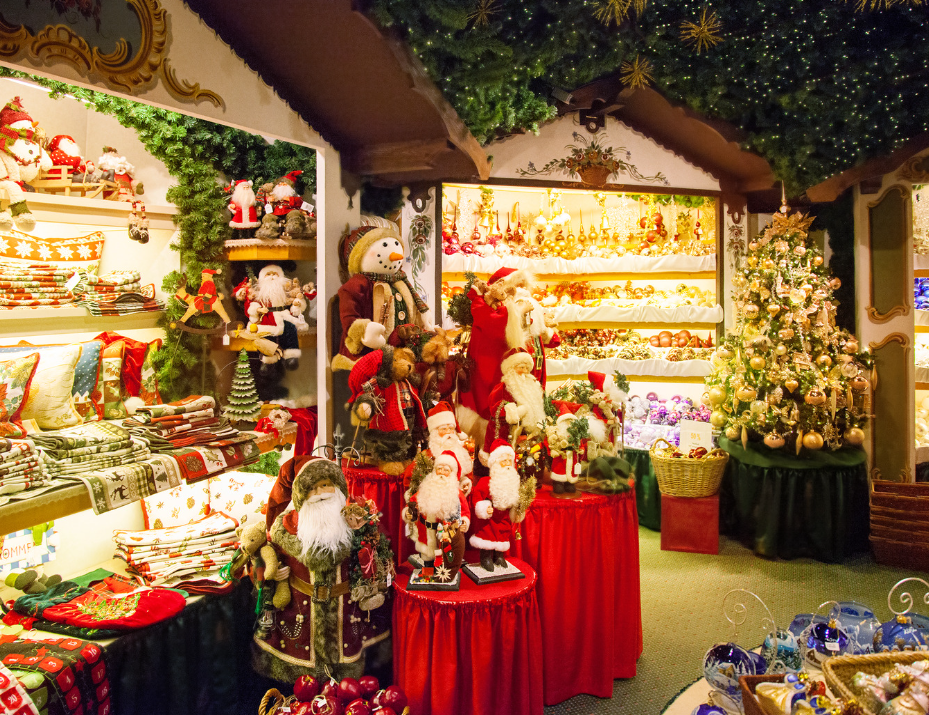
Holiday visual merchandising helps lift retail sales when displays make shopping faster and easier. The most effective approach is to create a clear gift-buying path: attract attention at the entrance, organize products by recipient or price, display best sellers at eye level, pair related items, and keep checkout displays simple.
For the best results, retailers should use fixtures that are easy to update as stock changes. Custom display cabinetry, shelving, glass showcases, and retail counters help keep holiday merchandising organized, polished, and on-brand.
1. Make The Entrance About One Offer
Your front window and entrance display should answer one question immediately: What can shoppers buy here for the holidays?
Choose one seasonal theme, one main colour story, and a small group of hero products. For example, a home-goods shop could lead with “Holiday Hosting Essentials,” while a boutique could feature “Winter Gifts Under $100.”
Avoid displaying every product category near the entrance. Too many products, messages, props, and colours make the display harder to understand. A strong holiday entrance display should make people want to stop, look, and walk into the store.
2. Organize Products Into Giftable Categories
Holiday customers often shop by person, occasion, or budget—not by product type. Visual merchandising should reflect the way people actually make gift decisions.
Create clear product groupings such as:
-
Gifts for teachers
-
Gifts for hosts
-
Gifts for children
-
Stocking stuffers
-
Gifts under $25
-
Gifts under $50
-
Premium gift ideas
These groupings reduce decision fatigue. Instead of searching through several departments, shoppers can move directly to a display that fits their needs. Use clear signage above or beside each category so customers understand the display without asking for help.
3. Put Best Sellers At Eye Level
Eye-level display space is prime retail space. Place high-demand products, new arrivals, profitable gift items, and limited-time holiday collections where customers naturally look first.
Lower shelving works well for heavier products, backup inventory, or items intended for children. Higher shelving works well for decorative props, signage, or merchandise that doesn’t need to be handled often.
Adjustable display shelving is especially useful during the holidays. It allows staff to move products as inventory changes, expand a popular category, and replace sold-out items without making the store look empty or disorganized.
4. Cross-Merchandise Related Products
Cross-merchandising means displaying products together when they naturally solve the same customer need. It helps shoppers build a complete gift instead of buying a single item.
Examples include:
-
Candles beside throw blankets and gift bags
-
Scarves beside hats, gloves, and winter coats
-
Serving boards beside specialty foods and wine accessories
-
Skincare sets beside travel cases and stocking stuffers
-
Children’s books beside puzzles, toys, or craft kits
Use short signs such as “Complete the Gift,” “Holiday Host Picks,” or “Pair It With” to explain why the products belong together. The connection should feel useful and natural—not random or overly promotional.
5. Make Prices And Promotions Instantly Clear
Holiday shoppers are busy. They should understand a display in seconds: what the products are, who they are for, and how much they cost.
Use large, high-contrast signage for:
-
Price points
-
Bundle offers
-
Limited-time promotions
-
Gift categories
-
New arrivals
-
Staff picks
Keep one main message per sign. If customers have to read a paragraph or search for a price, the display isn’t doing enough of the work. Simple, consistent signage also makes your store feel more professional and easier to navigate during peak traffic.
6. Turn The Checkout Into A Gift-Add-On Zone
Checkout space should be functional first, but it is also ideal for low-cost, easy-to-grab holiday items. Gift cards, wrapping supplies, small treats, travel-sized products, ornaments, and last-minute stocking stuffers can all work well here.
Do not overcrowd the counter. Customers still need room to pay, pack purchases, and speak with staff. The best checkout display contains a small, focused selection that feels helpful rather than pushy.
Custom retail counters can combine transaction space, concealed storage, and built-in display areas. This helps staff restock quickly while keeping bags, packaging, supplies, and clutter out of customer sight.
7. Refresh Displays Every Day
Holiday visual merchandising is not a set-it-and-forget-it task. Check displays daily for empty shelves, misplaced merchandise, damaged signage, clutter, and products that are no longer relevant.
A quick daily refresh can include:
-
Moving fast-selling products into more visible locations
-
Replacing sold-out items with comparable alternatives
-
Straightening shelves and folding merchandise
-
Removing outdated promotions
-
Cleaning glass showcases and counter surfaces
-
Replenishing gift categories before peak shopping hours
This ongoing attention helps the store look active, well-stocked, and ready for customers throughout the season.
Store Fixtures Toronto designs and builds custom commercial cabinetry, retail counters, display shelving, cabinet displays, glass showcases, solid surfaces, and architectural millwork.
If your holiday retail displays need better flow, stronger product visibility, or more flexible merchandising space, contact Store Fixtures Toronto for a consultation and free estimate.
Their team manages the process from your initial concept through production and installation, creating fixtures that support seasonal sales now and year-round merchandising later.